



For more than a century, passport photos have served a relatively simple purpose: providing a visual representation of a traveler for identity verification. While the basic concept remains unchanged, the technology surrounding passport photos has evolved dramatically.
Today, passport photos are no longer treated as ordinary photographs attached to travel documents. They have become machine-readable biometric assets used by facial recognition systems, immigration databases, automated border control gates, and increasingly sophisticated digital identity infrastructures.
Over the next decade, the role of passport photos is expected to change even further. Advances in artificial intelligence, biometric authentication, ePassports, and digital identity systems are reshaping how governments verify identity, process travelers, and secure borders.
The future of passport photography is not simply about taking better pictures. It is about creating standardized biometric data that can function within a global ecosystem of automated identity verification technologies.
Understanding where these technologies are heading helps explain why passport photo requirements are becoming increasingly technical and why compliance standards continue to evolve.
From Printed Photographs to Biometric Identity Records
Historically, passport photos were primarily intended for human review. Immigration officers compared the printed image to the traveler standing before them and made a visual judgment about identity.
Modern border systems operate very differently.
Today's passport photo serves as a biometric reference image that may be analyzed by:
Facial recognition systems
Automated immigration gates
Border security databases
Identity verification platforms
Digital credential systems
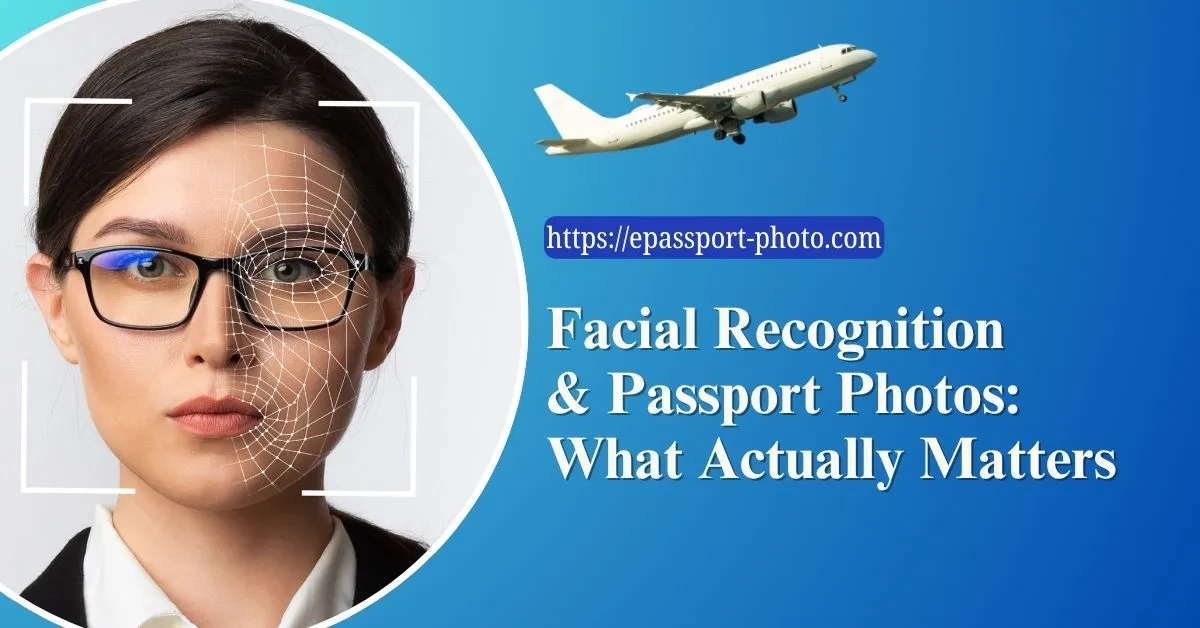
Instead of relying solely on human observation, modern systems compare mathematical representations of facial structure. This transition has transformed passport photos from visual identifiers into structured biometric records.
As digital identity systems expand, passport photos are becoming increasingly important components of machine-driven verification processes.
The Rise of ePassports
One of the most significant developments in international travel has been the adoption of electronic passports, commonly known as ePassports. An ePassport contains an embedded microchip capable of storing biometric and personal identity information.
This chip typically includes:
Passport holder information
Document authentication data
Digital versions of identity records
Biometric facial data
The purpose of the embedded chip is to improve security and reduce identity fraud.
When a traveler presents an ePassport at a border checkpoint, systems can compare:
The physical passport
The embedded digital data
A live facial scan
This creates multiple layers of identity verification.
As ePassport adoption continues to increase globally, the quality and consistency of passport photos become even more important because they serve as foundational biometric reference data.
How Facial Recognition Is Changing Identity Verification
Facial recognition is rapidly becoming one of the most widely used biometric technologies in border management.
Modern facial recognition systems analyze:
Facial geometry
Landmark relationships
Structural proportions
Statistical identity features
Instead of comparing photographs visually, algorithms convert faces into mathematical representations that can be matched against stored biometric templates.
This approach offers several advantages:
Faster processing
Reduced human error
Improved fraud detection
Scalable identity verification
As facial recognition systems continue to improve, passport photos must provide increasingly consistent biometric information. Future passport photos will likely be optimized not only for human viewing but also for machine interpretation.
Artificial Intelligence Is Transforming Passport Verification
Artificial intelligence is already playing a significant role in identity verification systems.
Modern AI-powered verification platforms can automatically detect:
Head positioning errors
Eye alignment problems
Background inconsistencies
Resolution deficiencies
Image manipulation
Machine learning models are trained using millions of facial images to identify patterns associated with compliant and non-compliant photographs.
As AI systems become more sophisticated, governments will increasingly automate the photo validation process. This means passport photos may be evaluated by algorithms long before they are reviewed by a human officer.
The future verification pipeline is likely to become faster, more consistent, and more dependent on technical image quality.
Why Standardization Will Become Even More Important
Artificial intelligence performs best when input data is consistent.
Every variation in lighting, facial angle, background quality, resolution, and expression introduces complexity into biometric analysis. For this reason, future passport photo requirements are likely to become more standardized rather than less.
Governments are investing heavily in systems designed to process millions of identities automatically. Standardized images reduce variability and improve matching accuracy across large databases.
The more automated identity verification becomes, the more valuable standardized passport photography becomes.
Digital Identity Systems Beyond Physical Passports
The future of identity verification may extend far beyond traditional passport books.
Many countries and international organizations are exploring digital identity ecosystems capable of supporting:
Mobile identity credentials
Digital travel documents
Electronic visas
Remote identity verification
In these systems, biometric facial data may become a central authentication factor. Instead of presenting a physical document, travelers could verify identity using secure digital credentials linked to biometric records.
Passport photos would continue playing a critical role because they provide the initial biometric reference image used throughout the verification lifecycle.
The Emergence of Digital Travel Credentials (DTCs)
A major development being explored by aviation and border authorities is the concept of Digital Travel Credentials. Digital Travel Credentials aim to allow travelers to securely share verified identity information electronically before arriving at airports or border checkpoints.
Under this model:
Identity verification begins before travel
Passport information can be securely transmitted
Border processing can become more automated
Biometric data, including passport photos, serves as a foundational component of these systems. The success of Digital Travel Credentials depends heavily on reliable biometric verification.
Will Passport Photos Eventually Become 3D?
Researchers and technology developers are actively exploring three-dimensional facial modeling technologies. Traditional passport photos are two-dimensional representations of a three-dimensional face.
3D facial systems offer potential advantages:
Better angle compensation
Improved recognition accuracy
Greater resistance to spoofing
Enhanced identity verification
While widespread adoption remains years away, future identity systems may increasingly incorporate 3D facial mapping alongside traditional passport photographs. However, even advanced systems will still require high-quality reference images to establish initial biometric records.
Deepfakes and the New Challenge of Identity Fraud
As biometric systems become more advanced, identity fraud techniques are evolving as well.
Artificial intelligence can now generate highly realistic synthetic faces and manipulated videos known as deepfakes. This creates new challenges for governments and security agencies.
Future verification systems will likely incorporate:
Liveness detection
Anti-spoofing algorithms
Deepfake detection systems
Multi-factor biometric validation
Passport photo verification will increasingly focus not only on identity matching but also on confirming that the image represents a real person. This is one reason governments continue investing in advanced AI verification technologies.
Privacy and the Future of Biometric Identity
As digital identity systems expand, concerns about biometric privacy will become increasingly important. Unlike passwords, biometric characteristics cannot easily be changed.
Future identity frameworks will likely place greater emphasis on:
Data minimization
Secure storage
User consent
Biometric protection
Privacy regulation
Governments and technology providers will need to balance security, convenience, and privacy while maintaining public trust. The handling of passport photos and facial data will remain a central part of that discussion.
How Passport Photo Creation Is Evolving
The process of creating passport photos is also changing.
Historically, applicants visited:
Photo studios
Pharmacies
Retail photo centers
Today, many people use smartphones and online tools to generate compliant passport photos from home.
As AI-powered validation becomes more accurate, photo creation platforms are increasingly incorporating:
Automated facial alignment
Biometric measurement checks
Background normalization
Compliance verification
Services such as Epassport-photo reflect this broader trend by helping users create standardized passport photos that align with modern document requirements while reducing common formatting errors.
As identity systems become more technical, tools used to create passport photos will likely become more sophisticated as well.
The Long-Term Vision: Identity Without Friction
The ultimate goal of many digital identity initiatives is to reduce friction during identity verification.
Future travelers may experience:
Faster airport processing
Automated border crossings
Remote identity validation
Seamless document verification
In this vision, passport photos function as part of a larger biometric ecosystem rather than standalone images. The photograph becomes the starting point for a digital identity that can be securely verified across multiple systems and environments.
Conclusion
The future of passport photos is closely tied to the evolution of artificial intelligence, biometric authentication, ePassports, and digital identity systems. What was once a simple printed photograph is rapidly becoming a critical component of global identity infrastructure.
As governments continue adopting facial recognition, machine learning, and automated border technologies, passport photos will play an increasingly important role as machine-readable biometric assets. Standardization, image quality, and biometric consistency will become even more important as verification systems grow more sophisticated.
For travelers, this means passport photography is no longer just about meeting document requirements. It is about creating a reliable biometric identity record that can function across an increasingly digital world.
Visit EPassport-Photo
Download the App | Android | IOS |
Frequently Asked Questions
Will AI replace passport photo verification officers?
AI is increasingly automating technical validation, but human oversight will likely remain important for complex cases and security reviews.
What is an ePassport?
An ePassport contains an embedded electronic chip that stores identity and biometric information used for secure verification.
Will passport photos still be required in the future?
Yes. Even advanced digital identity systems require biometric reference images for enrollment and verification.
Can facial recognition replace passports entirely?
Facial recognition may reduce reliance on physical documents, but identity systems will still require trusted credential frameworks and biometric enrollment.
Are digital identities replacing traditional passports?
Digital identity systems are expanding, but physical passports remain essential for international travel and are likely to coexist with digital credentials for many years.